Authority Marketing for the AI Search Era: How Buyers Decide Who to Trust
Authority Marketing Is More Important Now Than It Has Been Since the Beginning of Digital Marketing
The way people discover, evaluate, and choose brands has changed faster than most businesses realize.
Visibility does not start on your website anymore.
It starts in the places where people go to validate what they already suspect, compare options, listen to real opinions, and decide who they trust.
That means Reddit threads, TikTok videos, YouTube reviews, LinkedIn posts, niche forums, podcast interviews, expert articles, media mentions, creator breakdowns, AI answers, and Google search results are all part of the buying journey now.
This is why Authority Marketing is more important today than it has been since the beginning of digital marketing.
In the early days of digital marketing, simply having a website gave a business leverage. Then SEO became the advantage. Then paid ads. Then content marketing. Then social media.
Now, all of those pieces still matter, but they are no longer enough by themselves.
Today, the business that wins is not just the business that publishes the most content, runs the most ads, or ranks for one keyword.
The business that wins is the one that controls what buyers see, believe, and decide before the first conversation ever happens.
That is the real job of Authority Marketing.
And it is why ARMS REACH focuses so heavily on buyer research control, search visibility, authority positioning, and third-party trust signals. Because your prospects are already researching you. The only question is whether you are shaping that research or leaving it to chance.
The original article this revision is based on makes a similar point: modern discovery now happens across social platforms, forums, AI tools, news articles, videos, and search results—not just on a brand’s website.
Key Takeaways
People now research across multiple platforms before making decisions. Your brand needs to show up across those touchpoints, not just on your website.
Authority Marketing is no longer only about brand awareness. It is about shaping the research environment buyers use to make decisions.
Forums like Reddit and niche communities matter because they contain firsthand experience, objections, comparisons, and unfiltered opinions.
Short-form video, social search, and creator content now influence what shows up in Google, AI tools, and social platform search results.
Digital PR, expert commentary, media placements, social content, and community participation all feed the modern authority layer.
SEO becomes more powerful when it is supported by Authority Marketing, PR, social proof, third-party content, and buyer research control.
The New Discovery Journey and Why Authority Marketing Starts Before the Website
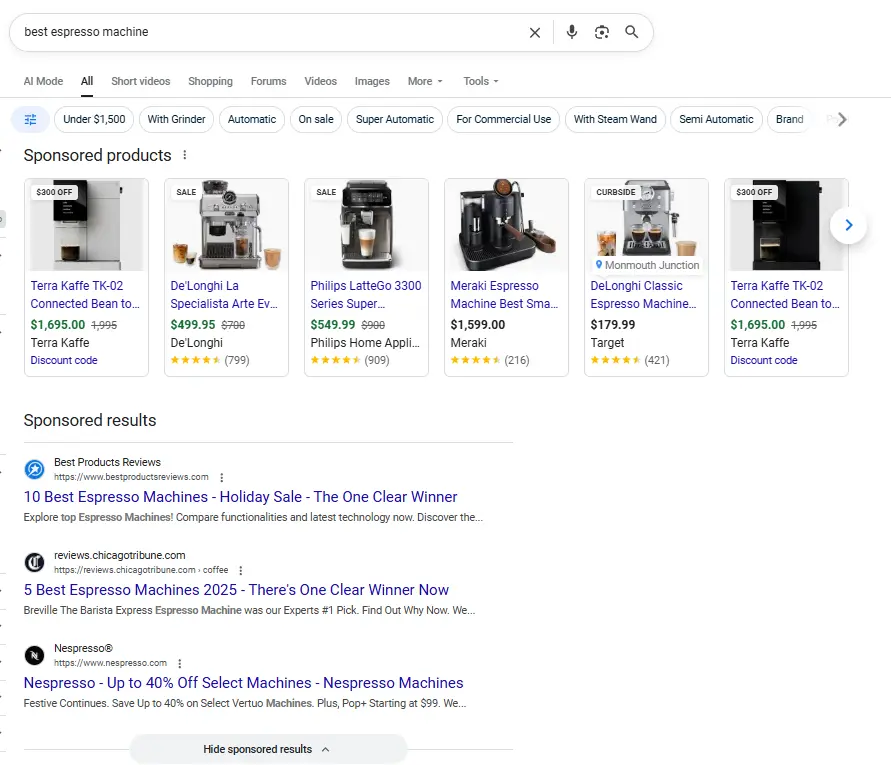
A few years ago, if someone wanted to evaluate a company, product, service, consultant, advisor, or agency, the process was fairly predictable.
They searched Google.
They clicked a few websites.
They compared options.
They made a decision.
It looked a little something like this:
That is not how buyers behave anymore.
Now, someone may ask ChatGPT for options. Then they check Reddit for real-world opinions. Then they watch YouTube for longer explanations. Then they scan TikTok or Instagram for quick reactions. Then they look at LinkedIn to see who is credible. Then they search Google to confirm what they already believe.
By the time they reach your website, they have often already formed an opinion.
That opinion may have been shaped by your content.
Or it may have been shaped by someone else.
This is the messy middle of modern marketing.
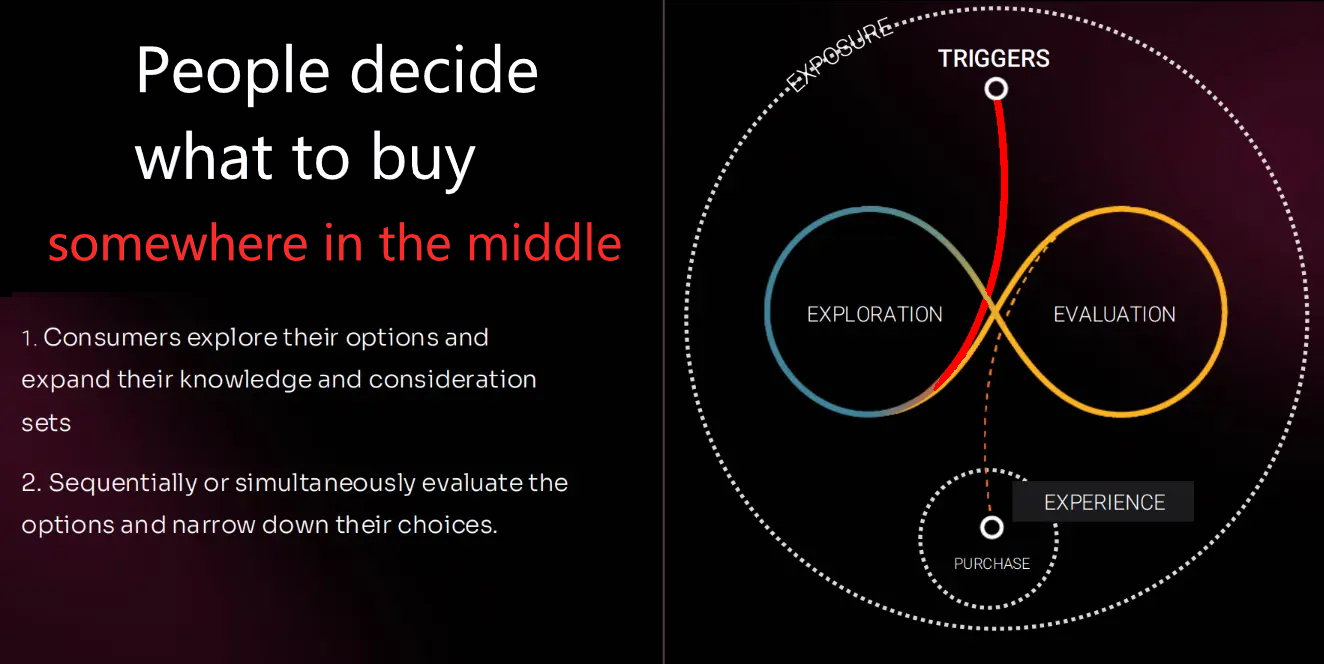
It is also where Authority Marketing does its best work.
Authority Marketing is not just about looking credible after someone lands on your homepage. It is about creating enough visibility, context, trust, and third-party validation across the research journey that your brand becomes the obvious choice before the sales call.
This matters especially for service-based businesses, consultants, advisors, agencies, and high-trust professionals.
Why?
Because your prospects are not just looking for information.
They are looking for certainty.
They want to know:
Can I trust this person?
Do they understand my problem?
Have they been validated by anyone other than themselves?
Do they show up in the places I expect a serious authority to show up?
Are they visible when I search the category?
Are they credible when I search their name?
That is where Authority Marketing becomes more than a marketing tactic.
It becomes infrastructure.
Why Forums and Community Conversations Now Shape Authority
Forums and niche communities are no longer fringe platforms.
They are part of the authority layer.
Reddit, industry-specific forums, Facebook Groups, LinkedIn conversations, YouTube comments, private communities, and review platforms all influence how people perceive brands.
The reason is simple.
People trust conversations that feel less filtered.
They want real opinions. Real complaints. Real use cases. Real comparisons. Real warnings. Real recommendations.
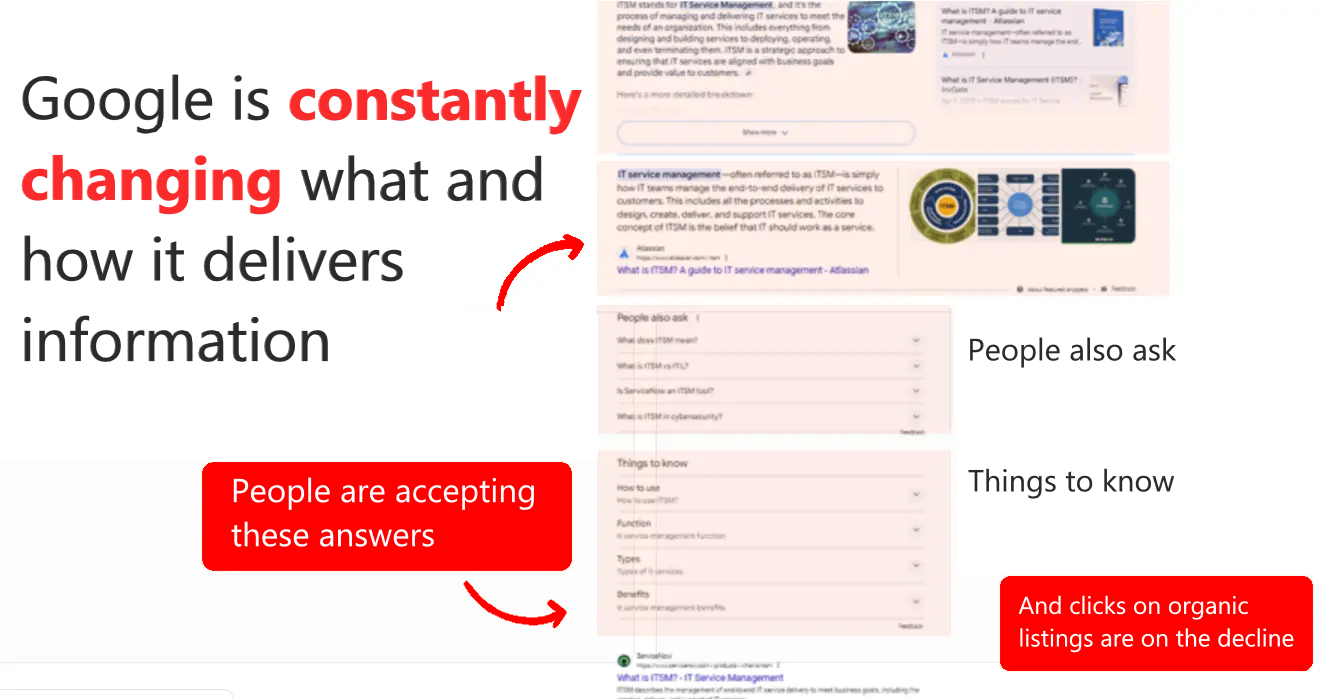
This is why Google has increasingly pulled forum content, social posts, video results, and discussion-based content into search results. It is responding to how people actually research.
When someone searches “best CRM for small business Reddit,” “is this consultant legit,” “best wealth advisor near me,” “reviews of [company name],” or “alternatives to [brand],” they are not just looking for a sales page.
They are looking for social proof.
They are looking for friction.
They are looking for the truth behind the polish.
Authority Marketing has to account for that.
A brand can no longer say, “We have a good website, so we’re fine.”
That is not enough.
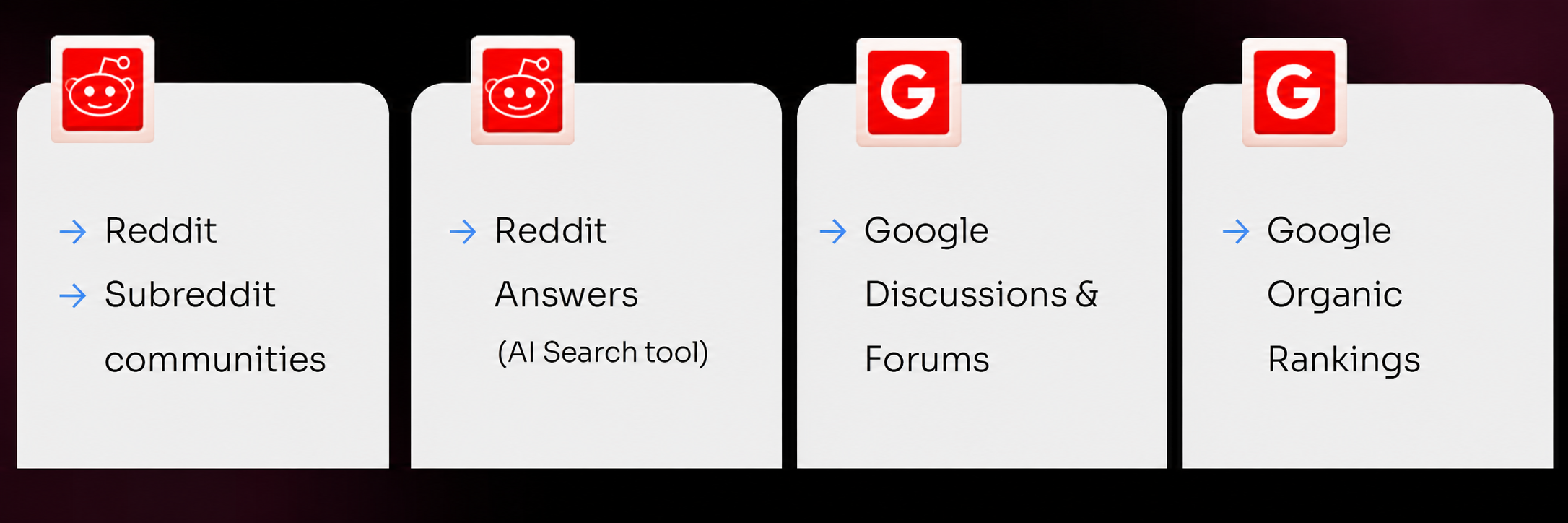
Your authority has to travel.
It has to show up in search.
It has to show up in social.
It has to show up in community conversations.
It has to show up in media.
It has to show up in AI-generated answers.
It has to show up before the buyer asks to speak with you.
That is the shift.
Community Conversations Shape Brand Perception Faster Than Brands Realize
The conversations that shape your brand are happening whether you participate or not.
People are asking questions.
They are comparing options.
They are sharing frustrations.
They are giving recommendations.
They are warning others.
They are explaining what worked and what did not.
And many businesses are not even watching.
That is a problem.
Authority Marketing starts with awareness. Before you try to dominate a conversation, you need to understand it.
What are buyers asking?
What language are they using?
What objections keep coming up?
What competitors are being mentioned?
What content is already ranking?
What platforms are influencing the final decision?
This is where buyer research control begins.
You cannot control what you do not monitor.
For ARMS REACH, this is one of the reasons Authority Marketing is not treated as “just content.”
Content is only one piece.
The real goal is to understand the buyer’s research path and then intentionally place authority assets along that path.
That may include a founder article.
A podcast interview.
A press mention.
A comparison article.
A short-form video.
A LinkedIn post.
A Reddit or forum contribution.
A case study.
A search-optimized landing page.
A third-party profile.
A FAQ that answers a high-intent objection.
The point is not to be everywhere randomly.
The point is to show up where the buyer is already looking.
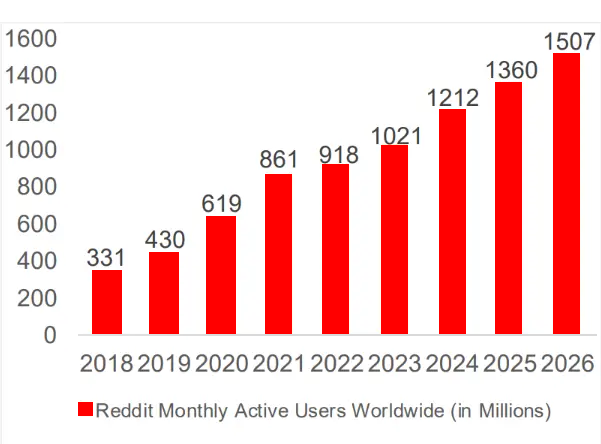
SOURCE: https://www.oberlo.com/statistics
Social Search Is Now an Authority Marketing Engine
Social media is no longer just a distribution channel.
It is a search engine.
People search TikTok, Instagram, YouTube, LinkedIn, Facebook, Reddit, and X for answers. They use social platforms to learn, compare, validate, and decide.
This is especially important for Authority Marketing because authority is not built only by what you say.
It is built by where you appear, how often you appear, who engages with you, and whether your content answers the questions buyers already have.
A business that only posts generic content will struggle.
A business that builds content around buyer research behavior has an advantage.
That means using the language buyers already use.
Not clever language.
Not internal language.
Not vague branding language.
Real search language.
The phrases people type.
The questions they ask.
The objections they repeat.
The comparisons they make.
The fears they have before buying.
For example, if someone is researching a financial advisor, they may not start with “fiduciary wealth management solutions.”
They may search:
“How do I know if I can trust a financial advisor?”
“What questions should I ask before hiring a retirement advisor?”
“Best advisor for business owners selling a company.”
“Is it worth paying for a wealth advisor?”
Those are Authority Marketing opportunities.
The same applies to attorneys, real estate professionals, consultants, agencies, tax advisors, insurance professionals, construction firms, and other high-trust service providers.
The business that answers the buyer’s real questions becomes part of the decision.
The business that does not gets compared against the business that did.
How Platforms Understand Authority, Keywords, and Relevance
Modern platforms are not just looking at hashtags.
They are reading and interpreting content in multiple ways.
They analyze captions.
They transcribe audio.
They read on-screen text.
They scan subtitles.
They evaluate engagement.
They look at user behavior.
They track what people watch, save, share, comment on, and search after viewing.
This means your Authority Marketing content has to be clear.

If you want to be associated with a topic, say the topic.
Use the keyword.
Use related terms.
Answer the question directly.
Make the content useful.
If Authority Marketing is the focus, then the content should actually discuss Authority Marketing, not dance around it with vague branding language.
If the topic is buyer research control, then the content should explain what buyers are researching, where they are researching, and how a business can shape that decision environment.
This is where a lot of brands make a mistake.
They try to sound polished instead of useful.
They try to be clever instead of clear.
But platforms reward clarity.
Buyers reward clarity.
AI tools reward clarity.
Search engines reward clarity.
Authority Marketing works best when your message, keywords, proof, and distribution all point in the same direction.
Why User-Generated and Employee-Generated Content Strengthen Authority
User-generated content has worked for years because it feels real.

But now it does more than support trust.
It supports discoverability.
The same is true for employee-generated content, founder-led content, expert commentary, and behind-the-scenes education.
People trust people faster than they trust brands.
A polished brand claim may say, “We are the best.”
A founder video can explain how the process works.
A client story can show the outcome.
An employee post can demonstrate expertise.
A podcast interview can create depth.
A media placement can create third-party validation.
A comparison article can answer objections.
A community comment can show helpfulness without selling.
All of those signals work together.
That is Authority Marketing.
It is not just one asset.
It is the accumulation of trust signals across the places buyers use to make decisions.
For high-trust businesses, this is critical.
If you sell something simple, maybe a discount or ad can do more of the work.
But if you sell advice, expertise, implementation, legal guidance, wealth management, construction services, consulting, strategy, or other high-value services, authority is not optional.
It is the bridge between attention and trust.
How Authority Marketing Fuels AI Overviews, LLM Citations, and Brand Visibility
AI has made Authority Marketing even more important.
Search engines and language models need sources.
They need context.
They need credible information.
They pull from websites, media articles, forums, expert commentary, structured data, public profiles, reviews, social content, and third-party mentions.
That means your brand’s authority footprint directly affects how AI systems understand you.
If there is very little credible information about you online, AI tools have very little to work with.
If your brand is consistently connected to a category, a problem, a point of view, a founder, a service, a location, and a body of third-party validation, AI tools have more context.
That does not guarantee citation.
But it increases the amount of usable authority material available.
This is why digital PR, social content, founder-led thought leadership, structured website content, and community engagement all matter now.
They create the information layer that search engines and AI systems can interpret.
And this is why old-school SEO by itself is no longer enough.
SEO helps you rank pages.
Authority Marketing helps you shape perception across the research environment.
The difference matters.
One is about traffic.
The other is about trust before traffic.
Bringing It All Together: Building a Buyer Research Control Strategy
A modern Authority Marketing strategy should not start with the question, “What content should we post?”
It should start with a better question:
“What does our buyer need to see, believe, and trust before they are ready to choose us?”
That is the foundation of buyer research control.
From there, you can build the authority system.
Here is what that may look like:
Identify the exact search phrases buyers use when researching your category, your competitors, your offer, and your name.
Map the platforms where those buyers validate decisions.
Build core authority assets that explain your point of view, your process, your proof, and your market position.
Create social content that answers high-intent questions in plain language.
Use PR and media placements to create third-party validation.
Participate in relevant community conversations without turning every interaction into a pitch.
Develop comparison content, FAQ content, founder commentary, case studies, and expert articles.
Repurpose the strongest ideas across YouTube, LinkedIn, short-form video, blog posts, newsletters, media pitches, and sales assets.
Structure the next logical step so the buyer knows exactly what to do once trust has been built.
This is not random content marketing.
This is not traditional SEO.
This is not PR for vanity.
This is Authority Marketing as visibility architecture.
And when it is done correctly, it supports the entire buyer journey.
It helps prospects find you.
It helps them understand you.
It helps them trust you.
It helps them compare you favorably.
It helps them arrive at the sales conversation already educated.
That is the point.
Not more noise.
More control.
FAQs
Why is Authority Marketing more important now?
Authority Marketing is more important now because buyers no longer make decisions from one source. They research across Google, AI tools, social platforms, forums, media, reviews, and community conversations before they ever contact a business.
Does social content influence search visibility?
Yes. Social content increasingly appears in search results and influences how people validate brands. Short-form videos, LinkedIn posts, YouTube content, Reddit threads, and other social assets can all shape visibility.
Should every business be active on Reddit?
Every business should at least listen. Reddit and similar communities reveal real buyer language, objections, frustrations, comparisons, and opportunities. Direct participation should happen carefully and only when the business can add value without being overly promotional.
How does Authority Marketing help with AI visibility?
Authority Marketing creates credible, structured, third-party-supported information that AI tools can understand. Media mentions, expert commentary, useful articles, community discussions, and strong website content all help define how a brand is represented.
What is buyer research control?
Buyer research control is the act of shaping what prospects see, believe, and decide before the first conversation ever happens. It is the practical outcome of strong Authority Marketing.
Conclusion
People search everywhere now.
They do not wait until they land on your website to form an opinion.
They ask AI tools.
They scan Google.
They watch videos.
They read articles.
They check Reddit.
They compare competitors.
They look for proof.
They listen to people they trust.
And by the time they book a call, request a quote, or fill out a form, much of the decision has already been made.
That is why Authority Marketing matters more now than it has since the beginning of digital marketing.
In the beginning, visibility was the advantage.
Now, controlled visibility is the advantage.
The businesses that win are not just the ones creating more content. They are the ones building authority across the entire buyer research journey.
They are showing up before the first conversation.
They are shaping perception before the sales call.
They are becoming the obvious choice before the buyer ever clicks “contact.”
That is the work of Authority Marketing.
And it is the reason ARMS REACH exists.
Because the business that controls the search… controls the market.


